Features
Benefits
HELPS CLEAR CLOUDY & MUDDY WATER
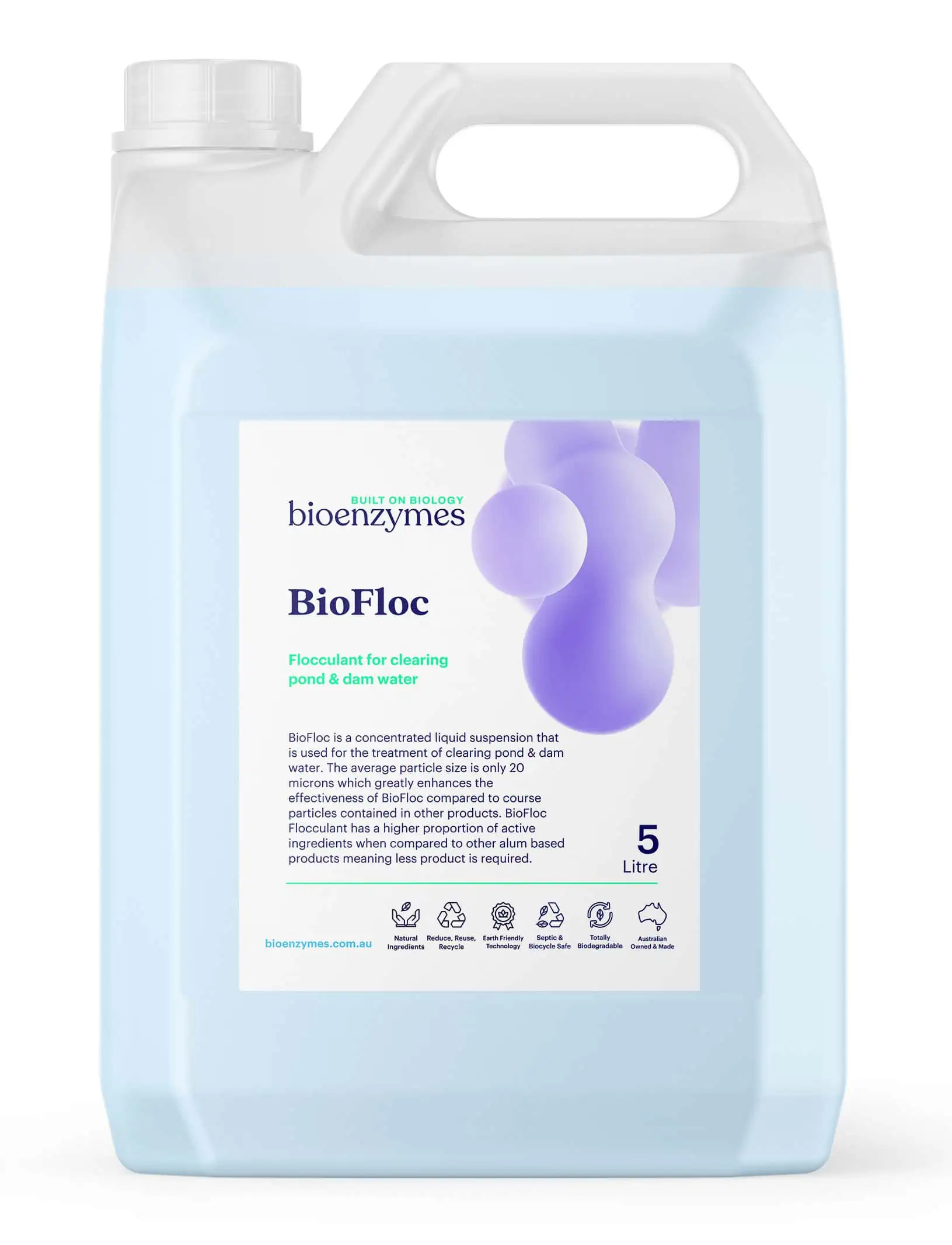
BioFloc targets fine suspended particles that make pond and dam water look murky. Its concentrated polyaluminium chloride formulation helps draw these particles together, improving clarity as the resulting clumps settle out of the water.
BRINGS FINE PARTICLES TOGETHER FOR EASIER SETTLING
Tiny clay particles and other suspended matter can remain dispersed in water instead of settling naturally. BioFloc works by neutralising the electrical charges that help keep these particles apart. They can then join together into larger clumps, known as flocs, which settle more readily.
CAPTURES SUSPENDED ORGANIC MATTER
As flocs form, they can also trap fine organic material contributing to cloudy water. This helps separate suspended matter from the water column, leaving clearer water above. The settled material remains in the pond or dam until removed and may become suspended again if disturbed.
CONCENTRATED LIQUID CONVENIENCE
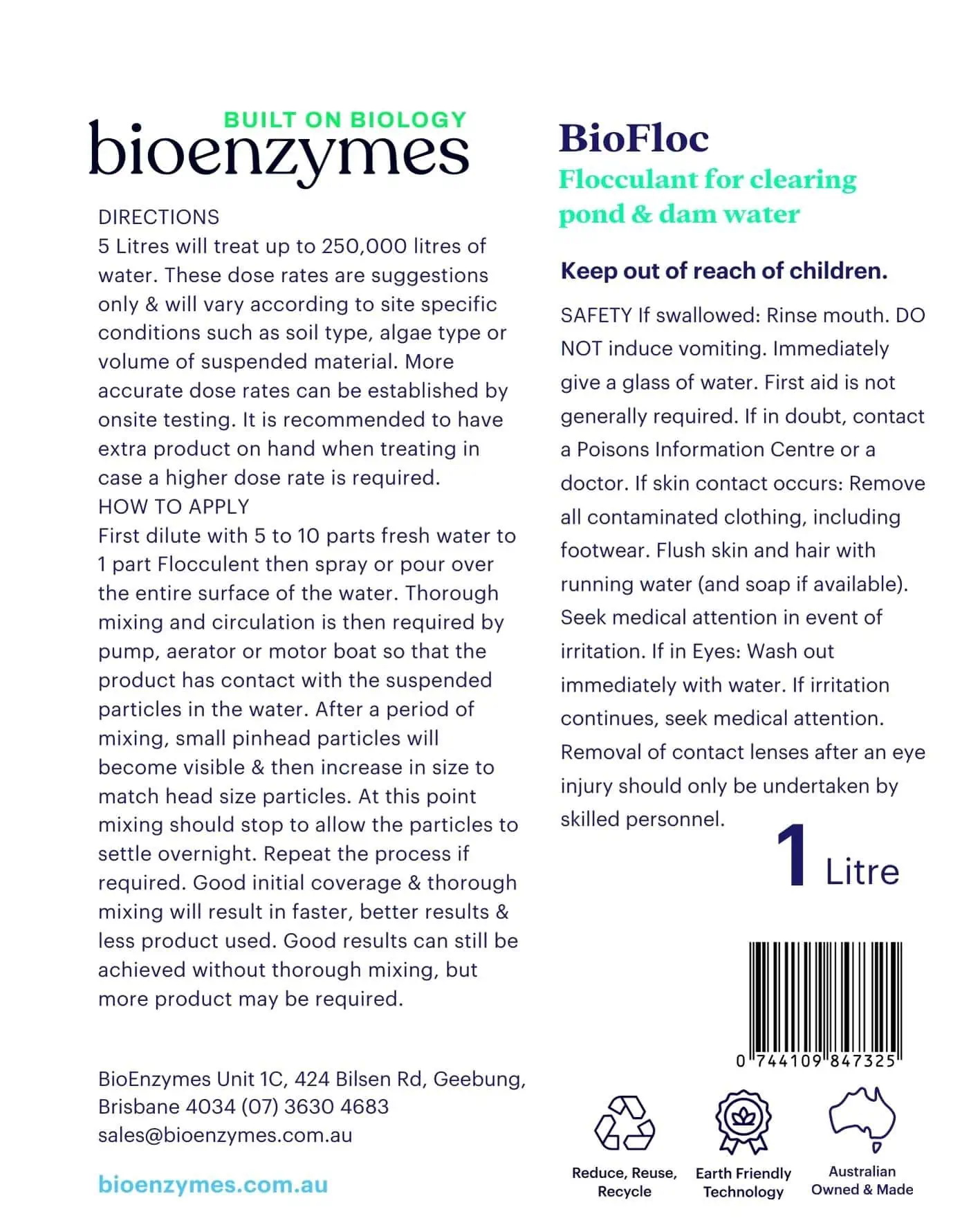
BioFloc’s liquid formulation allows measured application to suit the volume and condition of the water being treated. Follow the product directions and recommended preliminary testing to establish the appropriate dose for your pond or dam.
EFFICIENT COAGULATION TECHNOLOGY
Polyaluminium chloride generally forms robust flocs and can require lower treatment doses than conventional alum, depending on its concentration and the water conditions. This makes it a practical option for tackling suspended particles and improving water clarity.
TARGETED POND & DAM CLARIFICATION
BioFloc is designed to address cloudiness caused by suspended matter. Use it as part of a water management routine that also controls sediment entering the water and limits disturbance of settled material.
BIOFLOC — Clears the cloud. Reveals the difference.
Directions
alkalinity when assessing treatment suitability. Contact BioEnzymes or a water-treatment specialist for assistance with testing and dose selection, particularly where fish or other aquatic life are present.
Keep additional product available if testing indicates it is needed. Do not increase the dose simply because the water has not cleared immediately.
3. Dilute Before Application
Dilute 1 part BioFloc with 5–10 parts fresh water, measured by volume.
For example:
- 1 litre BioFloc: add to 5–10 litres of fresh water.
- 5 litres BioFloc: add to 25–50 litres of fresh water.
Place the water in a clean, suitable plastic container first, then slowly add the measured BioFloc while gently stirring. Prepare the diluted mixture for the current application only.
Wear protective gloves and eye protection, and follow the product label and Safety Data Sheet.
4. Apply Evenly Across the Surface
Distribute the diluted mixture as evenly as possible across the water surface using suitable spraying or pouring equipment. Use a coarse spray that avoids creating a fine mist.
Treat across several locations rather than pouring the entire quantity into one spot. For larger dams, suitable boat-mounted application equipment may help achieve even coverage.
5. Mix Thoroughly, Then Reduce Agitation
During and immediately after application, use a suitable pump, aerator or controlled motorboat circulation to distribute the treatment through the water containing suspended particles.
Avoid directing pump outlets or propeller wash into bottom sediment, which can stir up additional material.
As small, pinhead-like flocs become visible, reduce mixing intensity. Gentle circulation allows these particles to meet and grow into larger clumps. Excessive turbulence can break developing flocs apart.
6. Allow the Flocs to Settle
Once well-formed flocs are visible, stop treatment mixing and leave the water as undisturbed as practicable to settle overnight.
Settling time varies with water depth, temperature and the material being treated. Some ponds or dams may require longer before the full improvement becomes visible.
Where fish depend on aeration, maintain the oxygen supply they require. Arrange aeration to minimise disturbance of settling material; do not switch off essential life-support equipment simply to improve settling.
7. Assess Before Repeating
Inspect the clarity of the upper water after settling. If further treatment appears necessary, repeat small-scale testing on the remaining cloudy water before deciding on an additional dose.
Do not automatically repeat the full original dose. Poor clearing can result from inadequate distribution, unsuitable water chemistry or continuing sediment disturbance.
For Best Results
Apply evenly and provide effective initial mixing, followed by gentle floc development and quiet settling. Good distribution helps the product contact suspended particles and can reduce wasteful repeat applications.
Where mechanical mixing is unavailable, distribute the diluted product as broadly as possible. Results may be slower or less consistent; adding more product does not reliably compensate for poor mixing.
Limit muddy runoff and avoid disturbing settled sediment after treatment. BioFloc separates suspended material from the water—it does not digest or remove the resulting sediment from the pond.
Important Use Information
Confirm treatment suitability and dosing before use in water containing fish or other aquatic life. Clearing water does not disinfect it or make it safe to drink.